This post may contain affiliate links. Please read my disclosure policy for more details.
This simple potato stew tastes really delicious. That is easy, budget friendly, And it turns out kitchen staple And simple vegetables become aromatic, a nutritious hug in a bowl.
Published October 2021/Updated March 2026

It’s still quite cold here in London, and I thought I’d make it again and re-share this delicious meatless soup made with cheap potatoes and everyday ingredients.
Join my newsletter to get free weekly recipes!
I love it because it’s vegan, easy to whip up for a weeknight dinner, and easy to adapt with whatever vegetables or herbs you have on hand. But don’t mistake simple for bland, because this simple potato soup will surprise your taste buds!
The recipe is completely no frills. Diced potatoes are cooked with some diced carrots and celery in a flavorful broth mixed with dried herbs, Dijon mustard, tomato paste, and soy sauce.
This combination of ingredients adds depth and umami flavor to the broth, making this creamy potato soup rich and delicious, and perfect for those cold winter days.
Serve with me easy panini bread, ready in 1 hour, or as soft as this no-knead focacciato soak up all the delicious broth packed with tender potatoes. Trust me, everyone will come back for more!
List of ingredients
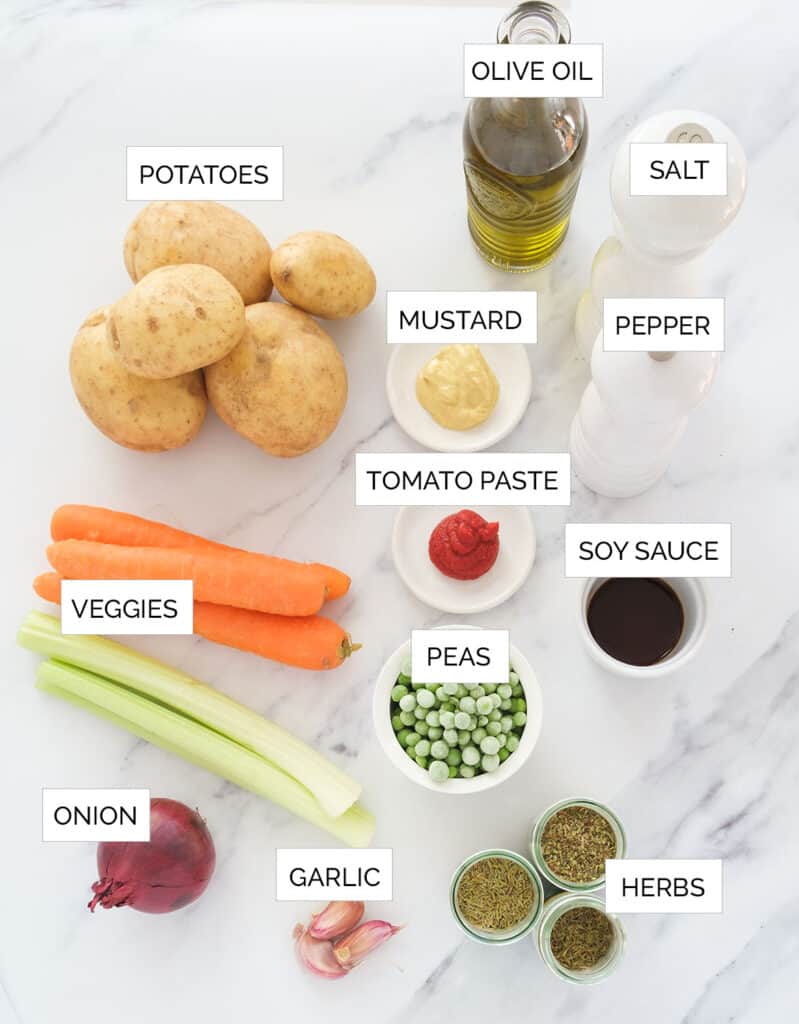
How to make potato soup
(Note: this is a short description; The complete recipe is at the bottom of the page.
- Saute the onion and garlic in olive oil 5 minutes.
- Add the diced carrots and celery.
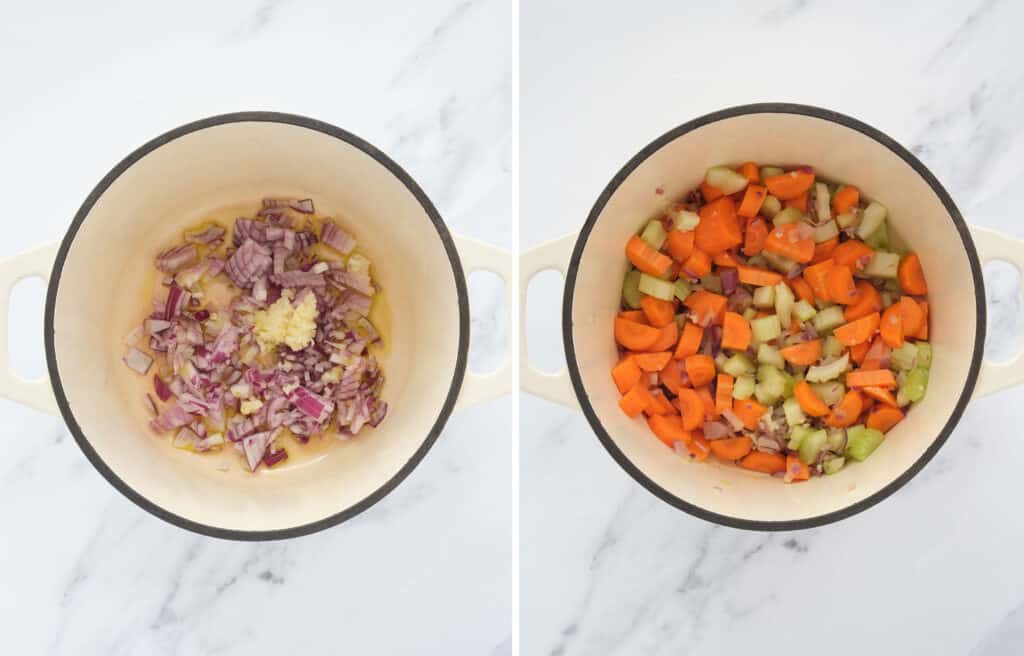
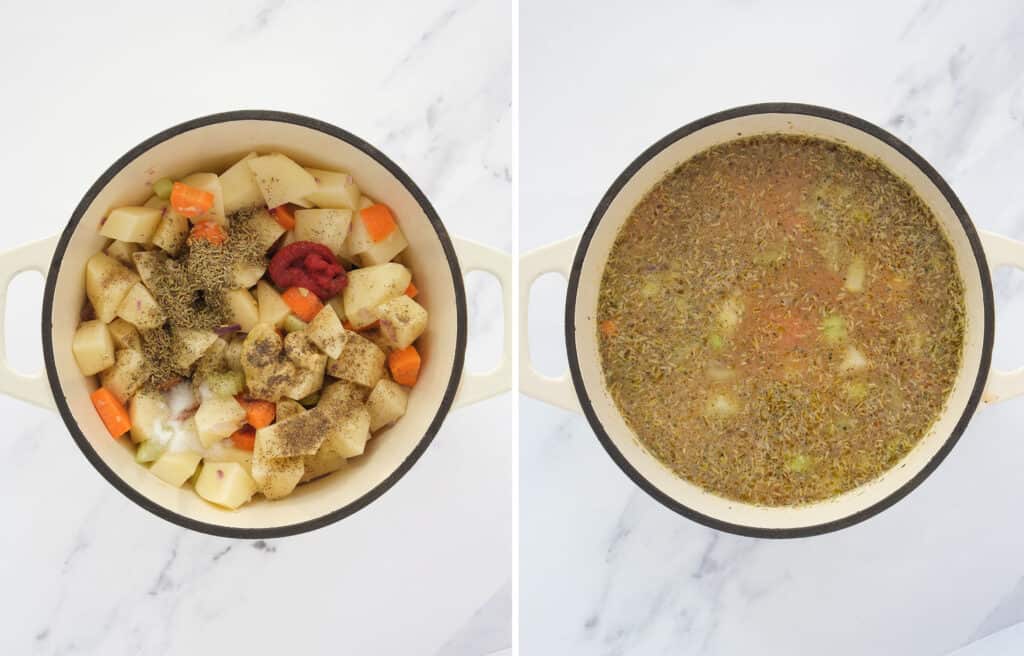
- Add potatoes, seasonings, tomato paste, soy sauce, mustard, stock and spices.
- Bring to a boil, and cook approx 20-25 minutes.
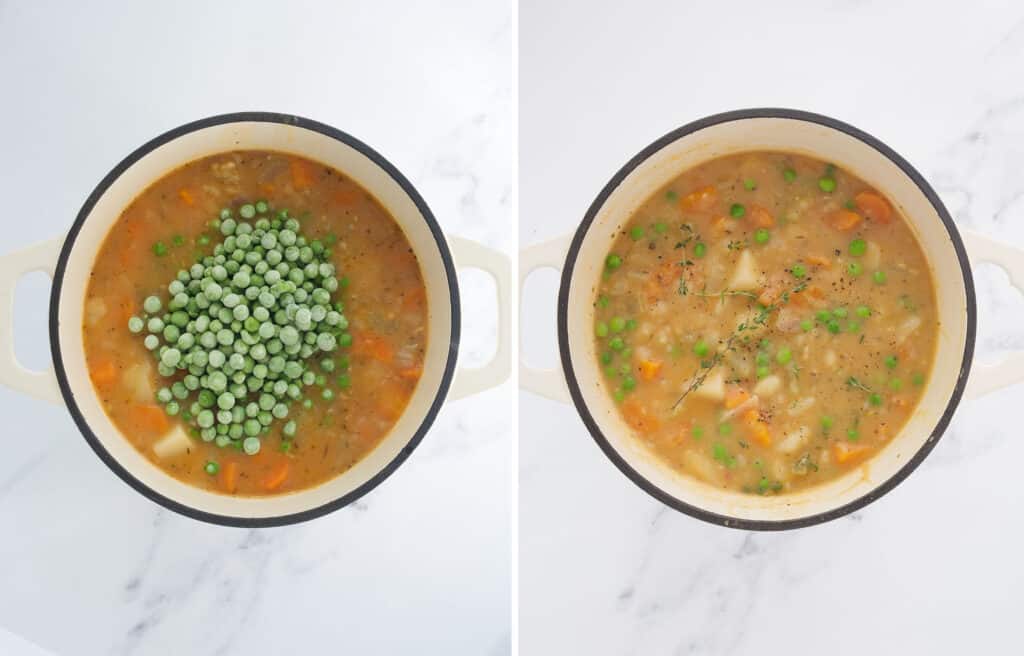
- Add frozen peas and cook 3 minutes until tender.
- Season to taste, then serve with chopped parsley, a pinch of black pepper and a drizzle of extra-virgin olive oil. do not forget dry bread!
PRO TIP: For a thicker gravy, I recommend blending some of the stew with an immersion blender or stand blender. I just mix together 1-2 cups of stock and the potatoes separately, then I return them to the pot.
Recipe notes
Potato stew ingredients
potato: For a stress-free soup, you can use any type of potato you have in your kitchen. I use Maris Piper, very popular in the UK, but Russets work well too.
Extra virgin olive oil: To stir fry’ onion and garlic to create a flavor base, and to drizzle the stew before serving.
Carrots, celery, onions, frozen peas: These are the most convenient and most perishable vegetables you can find in the fridge at night. Correct Big to remain available and add nutrition to the most basic foods. Carrots and celery are simply chopped here, not diced as required in a classic stir fry recipe.
Dijon mustard: It is French versionwith a milder flavor than English mustard, and works really well, adding depth to the flavor.
Tomato paste + soy sauce: This great kitchen staple adds umami taste into dishes, and, together with mustard, they make a very flavorful potato soup. But you can use half a cup of diced tomatoes instead of pasta, and leave out the soy sauce if you don’t have any.
Herbs: I used dried herbs for convenience, but you can use a sprig of fresh herbs fresh rosemary or thyme, and decorate the final dish with chopped fresh parsley. You can replace the Italian herb seasoning with oregano if you want.
Broth + spice: Low-sodium vegetable stock, or alternatively, hot water, can be used with the amount of salt called for in the recipe. You can also use your favorite vegetable or chicken stock, but in this case, add salt only at the end, to taste.

Variations of potato stew
This stuffed potato stew makes a healthy, comforting family meal that’s flexible and lets you play with the ingredients you have on hand:
- Mix the vegetables! You can add mushrooms, diced parsnips, or pumpkin. They make a nice variety, and seasonal too.
- Add green leafy vegetables: Try add fresh spinach or baby kale on last minute of cooking.
- Get extra savory: Grilled chicken, shredded or a handful grated Parmesan or cheddar cheese will make a delicious touch.
- Add more plant protein: Chickpeas, cannellini beans, and brown or green lentils make this potato soup tastier and higher in protein (see notes).
PRO TIP: If you swap ingredients or add beans, adjust the amount of stock and salt until you reach the desired consistency and seasoning.

Storage tips & leftovers
That leftover boiled potatoes keeps well in the refrigerator for 3-4 days. It will absorb all the stock as it sits. To reheat, add a little water to thin to the desired consistency, then warm slowly over medium-low heat. That is, too safe for freezers: I recommend dividing the stew into freezer-safe containers, refrigerating overnight, and transferring to the freezer.

More delicious potato recipes
If you’re looking for a budget-friendly way to use potatoes, I have these delicious recipes for you:
If you make this potato soup or if you have any questions, let me know! Leave a comment, send me a message, or rate it. I’d love to hear your thoughts!
And for more recipe updates, subscribe to my newsletter and follow me Instagram, PinterestAnd Facebook.
Easy Potato Stew
This easy potato stew is delicious and comforting. Starchy potatoes are combined with carrots, celery, peas and slow cooked in a rich, flavorful broth. Perfect for crusty bread to top it all off!
Portion: 4
Calories: 230kcal
- 1 Tablespoon olive oil
- 1 big onion (any color)
- 3 garlic cloves, chopped or pressed
- 3 medium sized carrots, cut into cubes
- 2 celery ribs, cut into cubes
- 1 lb (675 grams) potato, diced (approximately 1 inch cubes)
- ½ tsp dried rosemary
- ½ tsp Italian herb
- ¼ tsp dried thyme
- 1 Tablespoon I am a willow tree
- 1 Tablespoon Dijon mustard
- 1 Tablespoon tomato paste
- ½ – ¾ teaspoon fine salt, or according to taste
- ⅛ teaspoon black pepper, added more to serve
- 3 cups (720ml) low-sodium vegetable broth or water
- 1 cup frozen peas
- 2 Tablespoon chopped fresh parsley, for serving (optional)
-
Heat the olive oil in a large saucepan or Dutch oven. Add the diced onion and minced garlic and sauté over medium heat for about 5 minutes, until the onion is translucent.
-
Add diced carrots, celery and stir until combined.
-
Add the remaining ingredients (except the peas), bring to a boil, then reduce the heat to low and cover. Let it simmer for about 20-25 minutes, stirring occasionally.
-
When the potatoes are tender, add the frozen peas and cook for 3 minutes. Turn off the heat, taste and adjust the seasoning according to taste.
-
Optional: for a thicker broth, take 1-2 cups of the broth with the potatoes, mash them, add them back to the pot, and stir until combined. You can also use an immersion blender to blend some of the stew. However, be careful because the stew is still hot!
-
Serve the potato soup with freshly ground black pepper, a drizzle of extra-virgin olive oil, and fresh parsley. Enjoy!
Recipe variations: to get more plant-based protein, you can add 1 can of chickpeas, 1 can of white beans, or 3/4 or 1 cup of dried lentils. Rinse, drain, and add to the recipe when you add the potatoes. Whatever beans you decide to use, be sure to adjust the amount of stock, and remember that dried lentils require more liquid than canned beans. Trust your judgment and add liquid until you get the desired consistency.
Nutrition facts: nutritional values are for one serving and are based on an online nutrition calculator. These are estimates only, and should not be considered a substitute for the advice of a professional nutritionist. Please see mine disclosure policy.
Calories: 230kcal | Carbohydrate: 43G | Proteins: 7G | Fat: 4G | Saturated fat: 1G | Polyunsaturated fats: 1G | Monounsaturated fats: 3G | Sodium: 661mg | Potassium: 1047mg | Fiber: 8G | Sugar: 7G | vitamin A: 8033IU | Vitamin C: 55mg | Calcium: 64mg | Iron: 3mg
Join my newsletter to get free weekly recipes!
PakarPBN
A Private Blog Network (PBN) is a collection of websites that are controlled by a single individual or organization and used primarily to build backlinks to a “money site” in order to influence its ranking in search engines such as Google. The core idea behind a PBN is based on the importance of backlinks in Google’s ranking algorithm. Since Google views backlinks as signals of authority and trust, some website owners attempt to artificially create these signals through a controlled network of sites.
In a typical PBN setup, the owner acquires expired or aged domains that already have existing authority, backlinks, and history. These domains are rebuilt with new content and hosted separately, often using different IP addresses, hosting providers, themes, and ownership details to make them appear unrelated. Within the content published on these sites, links are strategically placed that point to the main website the owner wants to rank higher. By doing this, the owner attempts to pass link equity (also known as “link juice”) from the PBN sites to the target website.
The purpose of a PBN is to give the impression that the target website is naturally earning links from multiple independent sources. If done effectively, this can temporarily improve keyword rankings, increase organic visibility, and drive more traffic from search results.