This post may contain affiliate links. Please read my disclosure policy for more details.
This is delicious pasta with chickpeas, aka Italian “pasta e ceci”, is one of the best ready-to-serve one-pot family meals less than 30 minutes. He budget friendly, use a handful kitchen stapleand it feels like heaven.
Published March 2020/Updated March 2026
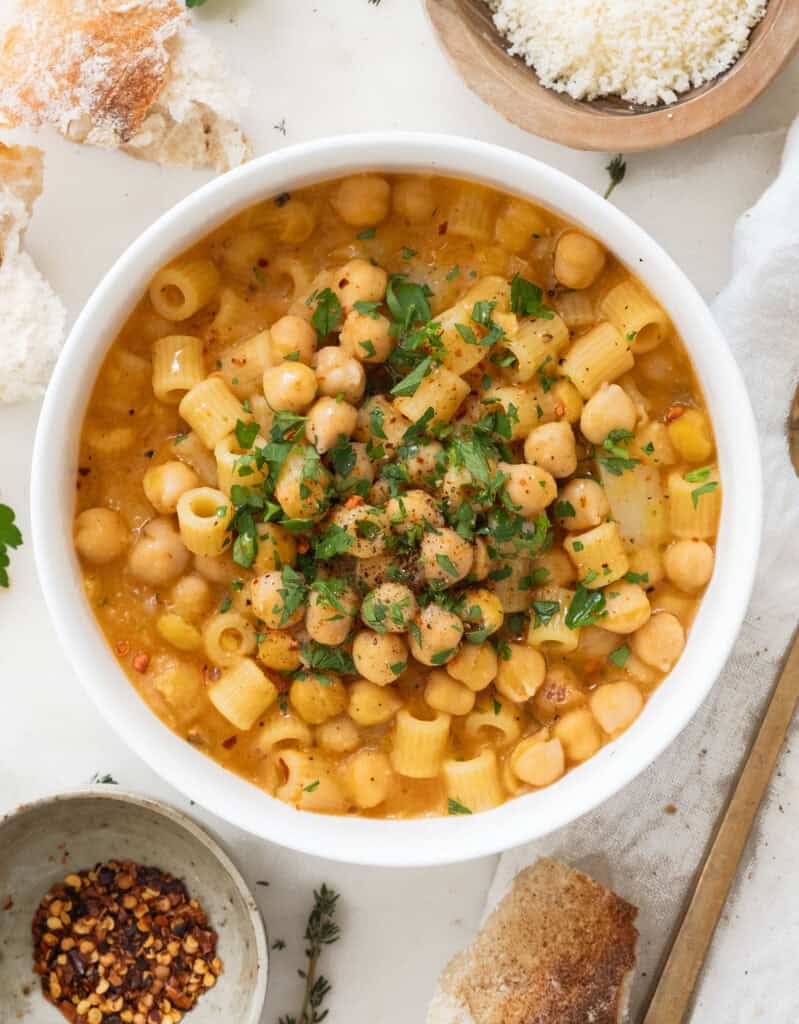
This is one of the first One pot pasta recipe I published it a few years ago, and I had to share it again to encourage you to make one if you haven’t already!
Join my newsletter to get free weekly recipes!
This chickpea pasta recipe is definitely a staple traditional Italian Cuisineplaces to cook pasta with beans are very popular fazool paste, pasta with lentilsAnd pasta with peas; everyone gets a warm welcome!
Today pasta with chickpeas is another guard, Budget recipe without frills I grew up and am still successful with my household.
Here’s the deal: minimal ingredients, everything is cooked in one pot, maximize flavor and texture (no need to dry pasta!), and flavorful food ready in less than 30 minutes.
What’s not to like? It’s also full of vegetable proteinfully budget friendly, and easy to prepare from the start with just a a handful of kitchen staples.
This is mine Italian chickpea pasta recipe for you to try!
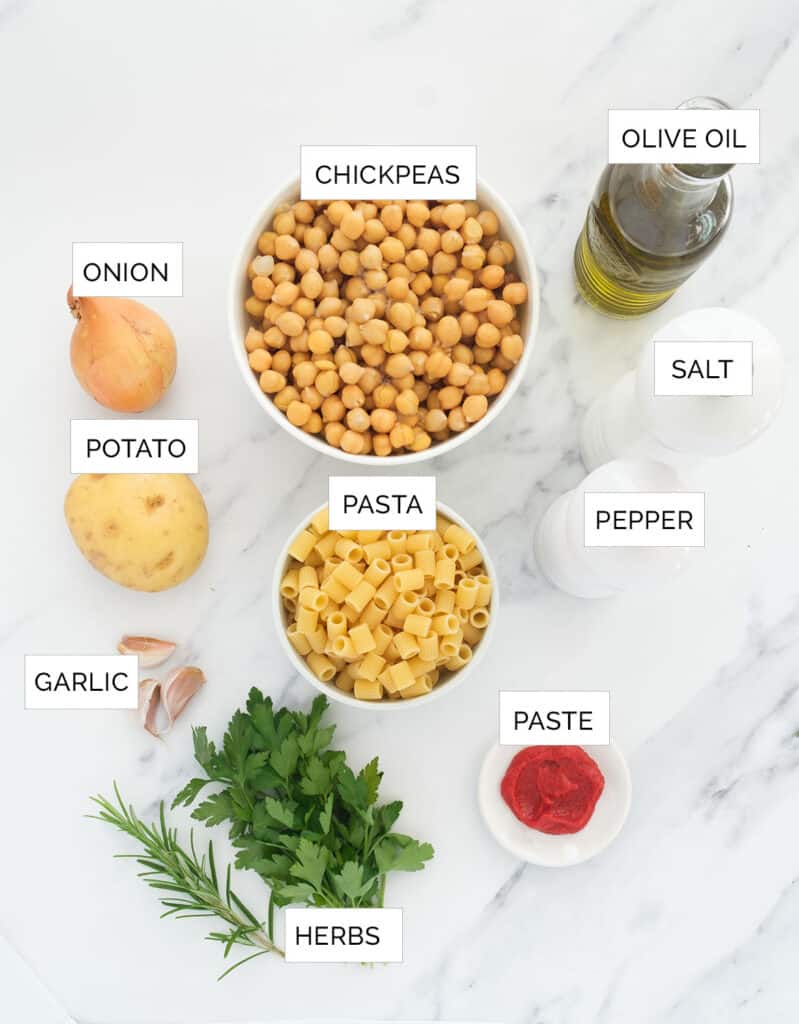
List of ingredients
- beans
- Pasta
- Onion and garlic
- Rosemary or bay leaf
- Extra virgin olive oil
- tomato paste
- Potato
- Parsley (optional)
- Salt & pepper
How to make a Chickpea pasta recipe
(Note: This is short description; the complete recipe is at the bottom of the page.)
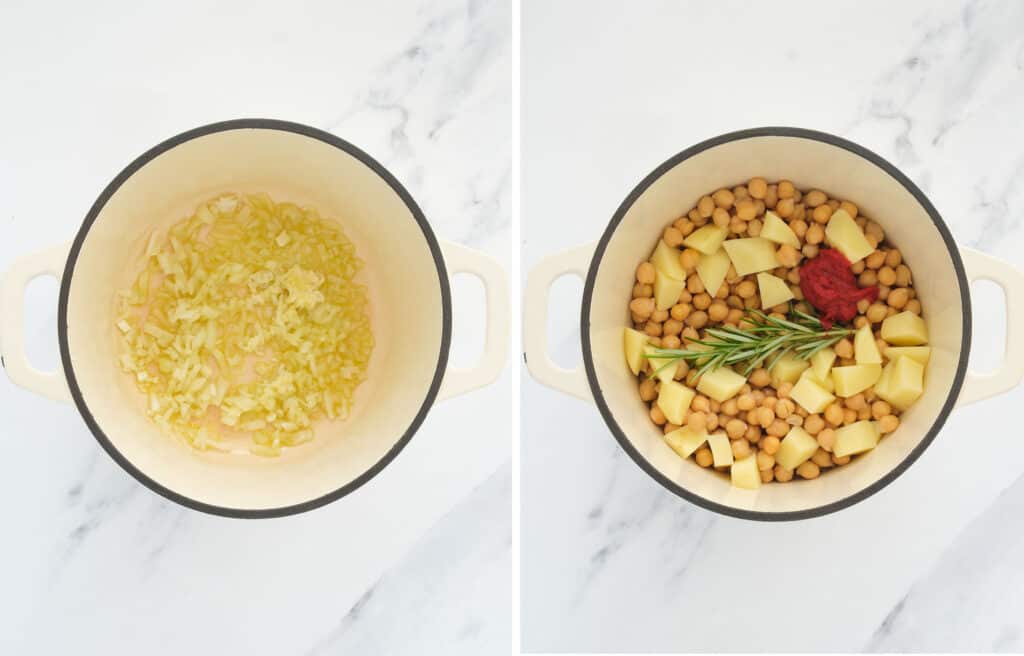
- Saute minced garlic and diced onion in olive oil in a large saucepan.
- Add chickpeas, diced potatoes, rosemary and tomato paste.
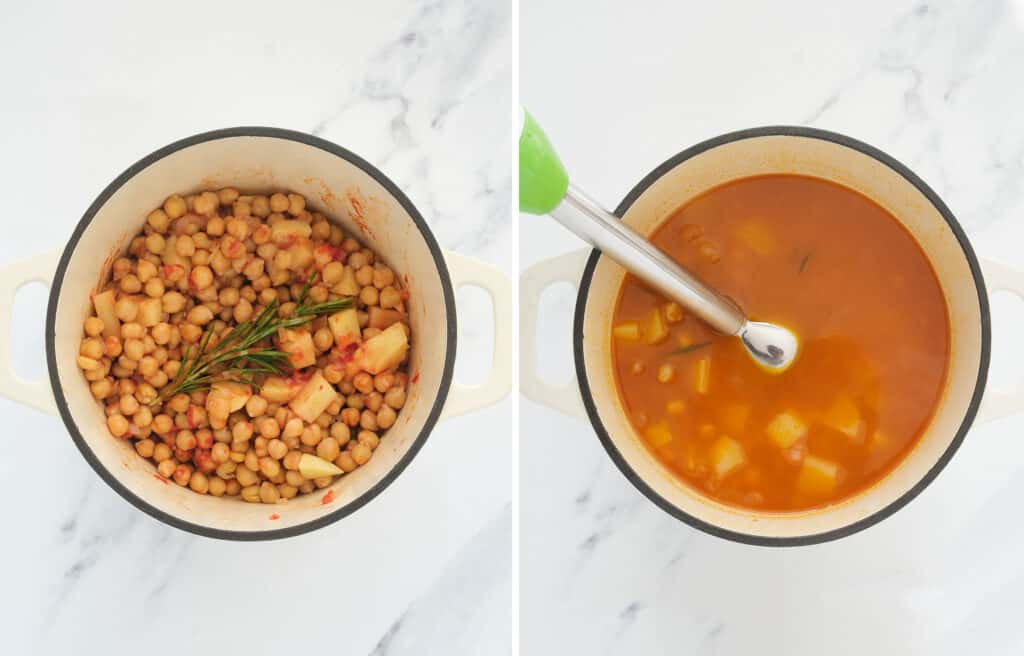
- Stir in stock, salt, and pepper, then cook 10 minutes.
- Discard the rosemary, puree half the chickpeas, or mash the potatoes with the back of a spoon to thicken the stock.
- Bring to a boil, add pasta, and reduce heat to a simmer.
- Stir frequently until the pasta is cooked. Before serving, stir in chopped parsley and extra-virgin olive oil, and adjust seasonings if necessary. It will be delicious with a little crust Italian bread, black pepper focacciaor garlic bread on the side. Enjoy your meal!
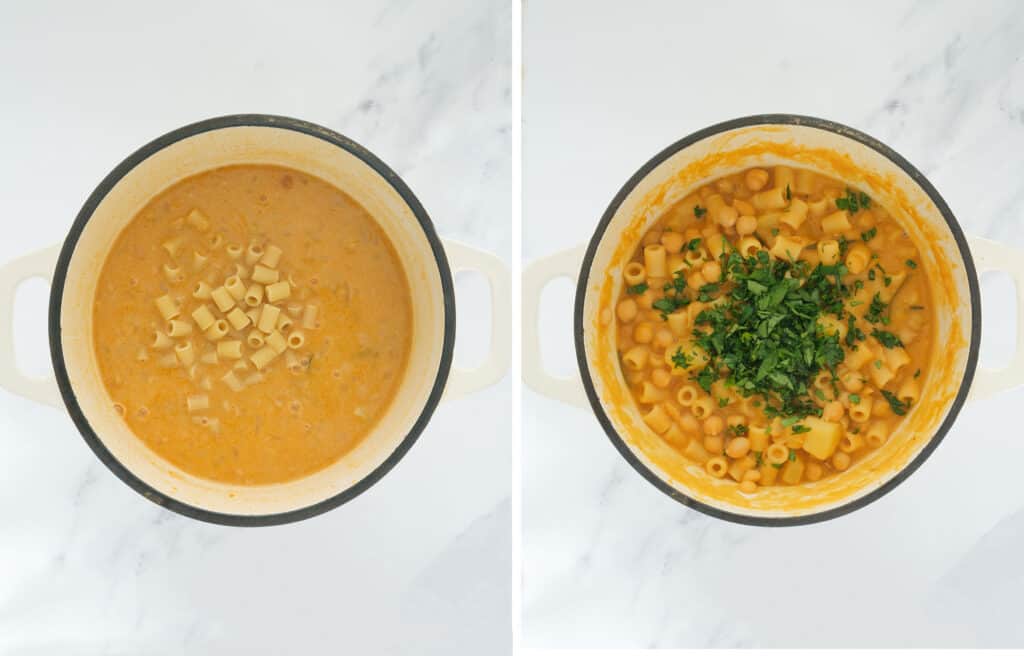
The liquid amounts on the recipe card are estimates. Depending on the type of pasta, you may need to increase or decrease the amount of water.
RECIPE NOTES
Chickpea pasta recipe ingredients
Onion + garlic + olive oil: We usually skip the classic soffritto in this recipe, but we start with garlic and onions sautéed in extra-virgin olive oil to build the flavor.
beans: The recipe requires 2 cans (15oz each) chickpeas for convenience, or 9oz (500g) homemade cooked chickpeas if you have time to soak it overnight. Cooking it on the stove takes 1 ½ to 2 hours, while cooking it inside Instant Pot takes about 17 minutes.
fresh herbs: Small sprig rosemary or bay leaf advertisementit is a wonderful aromatic taste. You can use 1/4 teaspoon dry rosemary, thyme, or Italian herb seasoning instead.
Broth: You can use low-sodium vegetable broth or water. Start with the amount of liquid listed in the recipe, then add gradually as needed.
Pasta: Form small pasta like ditalini is a must for this popular chickpea pasta recipe, but feel free to use whatever short pasta shape you have on hand. Another popular option is to break long pasta shapes like noodles, pappardelle, or spaghetti into smaller pieces.
Extra taste: In addition to checking the seasoning before serving, I recommend drizzling each bowl extra-virgin olive oil, splash black or red pepper flakesAnd decoration with fresh parsley.
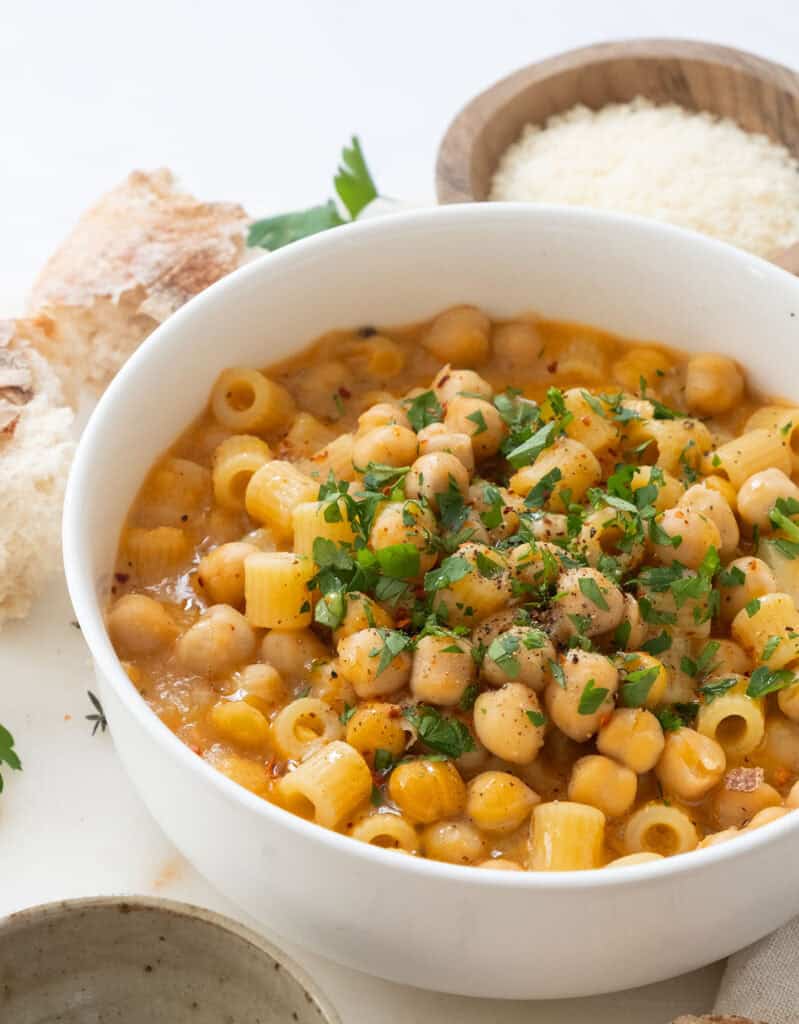
Pro Tips
There are many pasta recipes with chickpeas, but I like to cook everything in one pan. Here are some tips:
- Use the big onethick pan to make sure there is nothing stuck to the bottom. I use a cast iron dutch oven.
- Puree or crush some of the beans and potatoes. This step is optional, but it will thicken the broth and give it a more satisfying texture.
- Cook pasta and chickpeas together in one pan to maximize taste.
- The ratio of liquid to paste must be just right. Excess liquid should be absorbed as the pasta cooks. Depending on the shape of the pasta, you may need more or less liquid.
- Boil your pasta. That liquid is added gradually to the paste, which absorbs it completely and releases the starch.
- Stir frequentlyuntil the water is absorbed. Do not go!
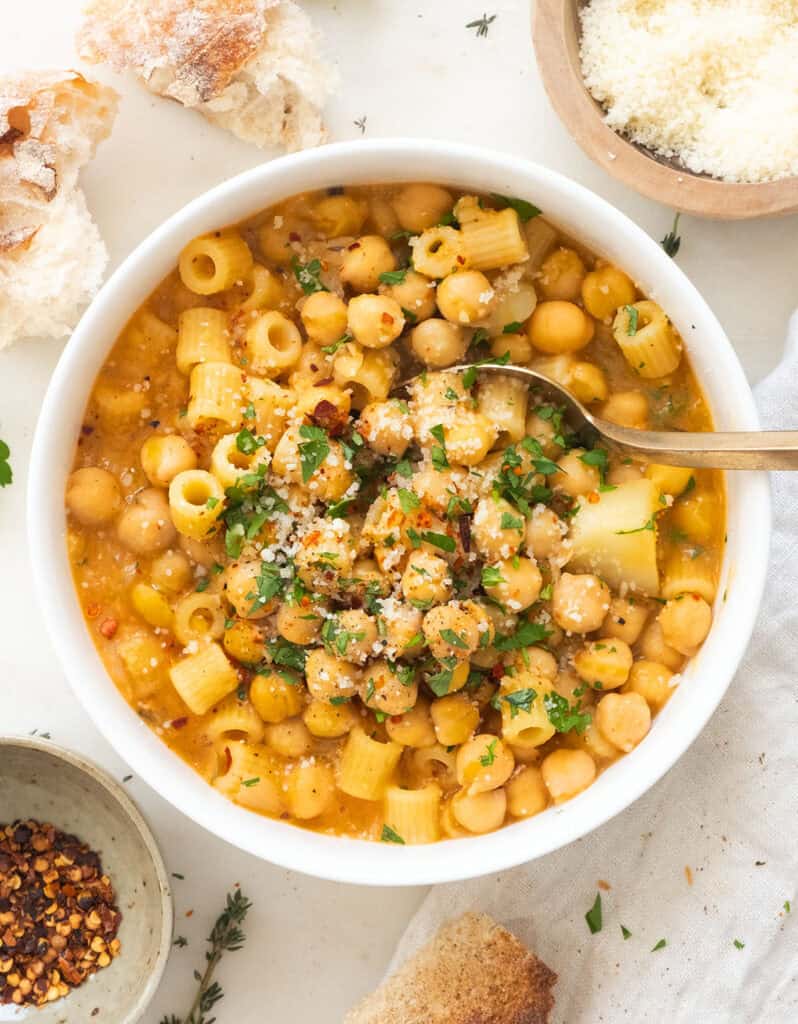
- Adjust the seasoning. Before serving, make sure the taste has come out. Serve with freshly ground pepper, extra-virgin olive oil, and Parmesan cheese if you like.
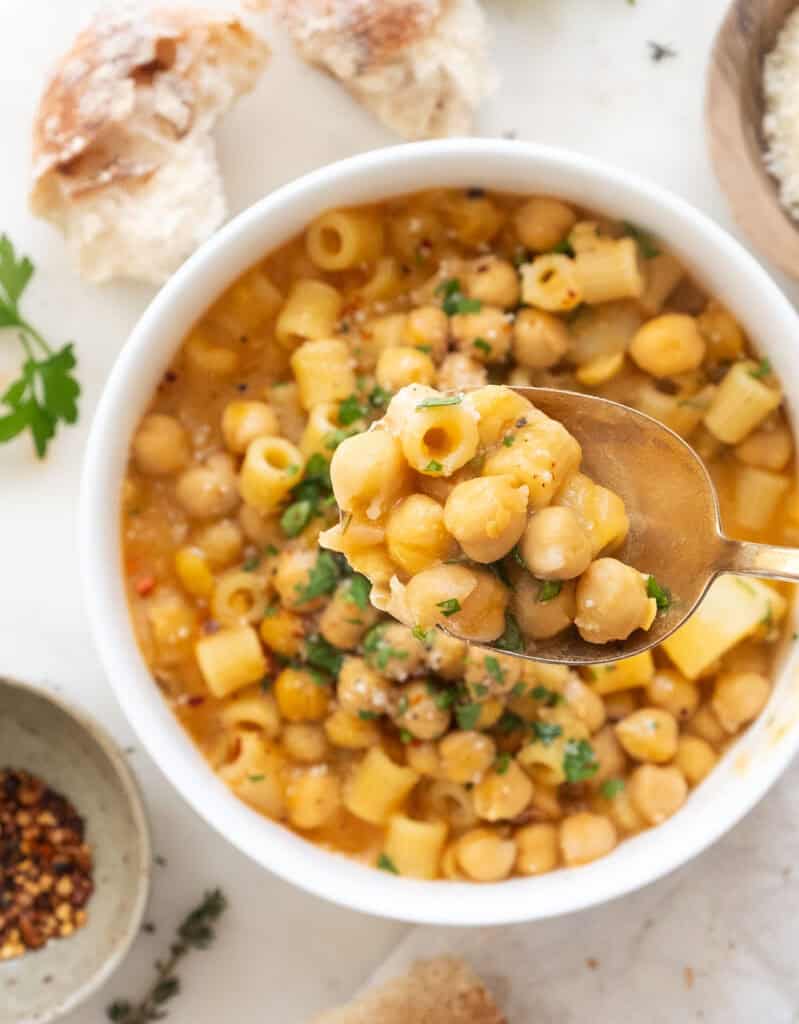
How long does it last?
If there are any leftovers, save them That pasta with chickpeas in a tightly closed container in the refrigerator 2-3 days. However, pasta will absorb significant amounts of liquid as it sits. To reheat it, add 1 glass of water to thin it to the desired consistency, then warm it slowly over medium-low heat.
More recipes with chickpeas?
If you love it as much as we do, don’t miss this collection of healthy, delicious foods Chickpea recipe. Here are some of our favorites:
Let me know if you make this Chickpea pasta recipe or if you have any questions! Leave a comment, send me a message, or rate it.
I’d love to hear your thoughts!
And for more recipe updates, subscribe to my newsletter and follow me Instagram, PinterestAnd Facebook.
Chickpea Pasta Recipe
Portion: 4
Calories: 472kcal
- 1 tablespoon olive oil or extra virgin olive oil
- 1 medium sized onions, cut into cubes
- 3 garlic cloves, chopped or pressed
- 2 cans (14oz/400gr each) beans, drained
- 1 medium sized potatoes, cut into cubes
- 1 tablespoon tomato paste
- 1 sprig of rosemary or 1 bay leaf
- 4 cups (960ml) low sodium vegetable broth (or water), use more if needed
- ¾ to 1 teaspoon fine salt, or according to taste
- ⅛ teaspoon black pepper
- 8 oz (220 grams) short pasta form (scallops, orecchiette, stringed...)
- 2-3 tbsp chopped parsley (optional, but recommended)
To serve (optional)
- drizzle extra virgin olive oil
- freshly ground black pepper
- grated parmesan or pecorino cheese (optional)
-
Heat the olive oil in a large Dutch oven or heavy-based saucepan over medium heat. Once the oil shimmers, add the diced onion and cook until soft, about 5 minutes. Add the garlic in the last two minutes.
-
Place the chickpeas, diced potatoes and tomato paste, and the rosemary swirl in the pan (you can also use dried herbs – see notes in post).
-
Next, add vegetable stock or hot water, salt, and pepper (1 tsp salt is fine if using water or low-sodium stock, but if using regular stock, adjust seasoning at the end; see notes below). Increase the heat to a boil, then cover the pan, reduce the heat, and cook for 10 minutes until the potatoes are tender.
-
Turn off the heat, remove the rosemary, and puree only some of the chickpeas with an immersion blender. Alternatively, mash the beans and potatoes with the back of a spoon or a potato masher. Be careful; the liquid is still hot.
-
Bring back to a boil, add dry pasta, cook while stirring often (otherwise the pasta will stick to the bottom of the pan). Cook until the pasta is tender but still firm to the bite. You don’t need to cover the pot with a lid, but make sure you keep an eye on it. If the broth seems too thick, add a little water and thin to the desired consistency.
-
When ready to serve, taste and adjust the seasoning with salt and pepper to taste.
-
Stir in chopped fresh parsley, divide into bowls, and serve with a drizzle of olive oil, freshly ground black pepper, and grated Parmesan or Pecorino cheese if you’re not making it vegan. Garnish with more parsley, and enjoy!
If you don’t have an immersion blender, take about 1 1/2 cups of chickpeas and some stock into a blender, puree until smooth, then return the mixture to the saucepan.
Spice: I usually cook pasta and chickpeasme with water, but if you prefer to use regular vegetable or chicken stock, keep in mind that it may taste quite salty. It’s important to adjust the seasoning at the end, not at the beginning, because you never know how strong the salt of the stock will be.
Nutrition facts: The nutritional value is only for one serving. They are based on online nutrition calculators. These are estimates only and should not be considered a substitute for professional nutritionist advice. Please see mine disclosure policy.
Calories: 472kcal | Carbohydrate: 83G | Proteins: 19G | Fat: 8G | Saturated fat: 1G | Polyunsaturated fats: 2G | Monounsaturated fats: 3G | Sodium: 628mg | Potassium: 671mg | Fiber: 12G | Sugar: 9G | vitamin A: 96IU | Vitamin C: 10mg | Calcium: 87mg | Iron: 5mg
Join my newsletter to get free weekly recipes!
PakarPBN
A Private Blog Network (PBN) is a collection of websites that are controlled by a single individual or organization and used primarily to build backlinks to a “money site” in order to influence its ranking in search engines such as Google. The core idea behind a PBN is based on the importance of backlinks in Google’s ranking algorithm. Since Google views backlinks as signals of authority and trust, some website owners attempt to artificially create these signals through a controlled network of sites.
In a typical PBN setup, the owner acquires expired or aged domains that already have existing authority, backlinks, and history. These domains are rebuilt with new content and hosted separately, often using different IP addresses, hosting providers, themes, and ownership details to make them appear unrelated. Within the content published on these sites, links are strategically placed that point to the main website the owner wants to rank higher. By doing this, the owner attempts to pass link equity (also known as “link juice”) from the PBN sites to the target website.
The purpose of a PBN is to give the impression that the target website is naturally earning links from multiple independent sources. If done effectively, this can temporarily improve keyword rankings, increase organic visibility, and drive more traffic from search results.